Nagpur & Katol · Consultations by appointment
When surgery becomes a turning point, not just a procedure
Dr. Shriniket Sawarkar — General and Advanced Laparoscopic GI HPB Surgery. Your partner through complex digestive and liver conditions, with precision, care and minimal disruption to your life.
Patient reviews on Google (opens in a new tab)MS · FIAGES · FMAS · EFIAGES · Fellowship in HPB Surgery

- Surgeries performed
- 1,000+
- Years of surgical practice
- 10+
- Discharge for many keyhole procedures
- Same-day
- Clinics across Nagpur & Katol
- 3
A note from Dr. Sawarkar
You deserve more than just a diagnosis
Every week, patients walk into my clinic carrying more than medical reports — they carry fear, uncertainty, and questions no Google search can answer.
- “Will this surgery change my life forever?”
- “How long before I can hold my grandchild again?”
- “Is there a way to do this without a big scar?”
These aren't just medical concerns. They're human ones.
That's why I built my practice on a simple promise: surgery should be the beginning of your recovery, not the end of your normal life.
Whether you're facing gallstones that won't let you enjoy a meal, a pancreatic condition you're struggling to make sense of, or a cancer diagnosis that feels overwhelming — you're in the right place.
What I do, in plain language
The four pillars of my practice
01
Laparoscopic Surgery
The keyhole revolution
Surgery through a mail slot instead of knocking down the door — tiny incisions, walking the same day, back to your desk in days rather than weeks.
02
HPB Surgery
The specialist zone
The liver, pancreas and bile ducts are the deep end of digestive surgery — complex organs that call for specialised training and careful planning.
03
GI Cancer Surgery
Fighting smart, not just hard
Removing precisely what needs to go — and saving what can stay — in close coordination with your oncologists.
04
Endoscopy
Seeing is knowing
Sometimes the best surgery is the one we avoid because we caught the problem early.
What to expect
Your journey, step by step
From the first conversation to your last check-up — here's how care works, so nothing comes as a surprise.
Step 01
Consultation
We listen, examine you and go through your reports and scans. A first visit usually takes 20–30 minutes, and family members are welcome.
Step 02
Tests and a clear plan
If more information is needed, we arrange blood tests or scans. Then we explain your options in plain language — including whether you need surgery at all.
Step 03
Surgery, if needed
Most operations are done by keyhole. Before the day you'll know what to expect: the procedure, anaesthesia, hospital stay and insurance paperwork.
Step 04
Recovery at home
You go home with clear instructions on food, activity, medicines and warning signs, plus a patient guide for common operations.
Step 05
Follow-up
A check-up to review healing and any biopsy results, and to clear you for your normal routine.
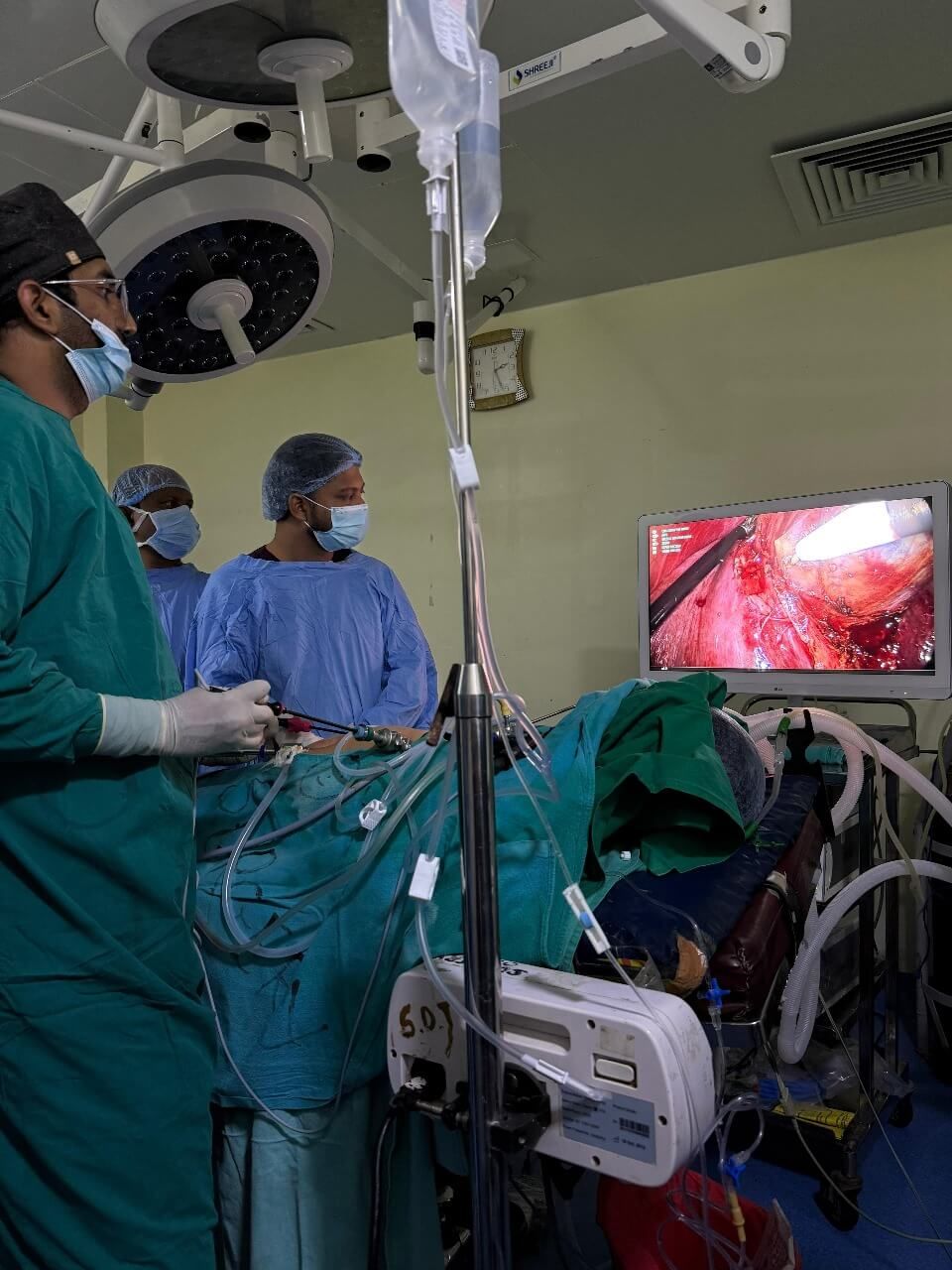
What experience brings
Why experience matters in surgery
Surgical research links a surgeon's experience with a procedure to better results. Here is what that experience means for you in practice.
- 01Every anatomy is different
- No two patients are built exactly alike. Experience helps a surgeon recognise variations and adapt during the operation.
- 02Careful planning
- Scans and reports are reviewed in detail beforehand, so difficulties can be anticipated and the approach planned around you.
- 03Efficient, unhurried surgery
- Familiarity with a procedure usually means less time under anaesthesia — without rushing any step.
- 04Previous operations
- If you have had abdominal surgery before, scar tissue and altered anatomy are planned for rather than discovered on the day.
The condition I treat most
Let's talk about gallstones — and why waiting is risky
Gallstones are hardened deposits in the gallbladder. Many people discover them on an ultrasound done for something else. The tricky part: silent stones don't always stay silent.
Symptoms that mean it's time to act
- Severe pain in the upper right abdomen, especially after eating
- Nausea, vomiting or jaundice (yellow skin or eyes)
- Fever with abdominal pain — this is an emergency
- Surgery time
- 30–45 min
- Discharge for many patients
- Same day
- Back to desk work
- 4–5 days
- Scarring
- Minimal
Second opinions
Clarity before complexity
Advised a major "open" operation, or facing a complex liver, pancreas or cancer diagnosis? A careful second review of your scans and reports can confirm the plan — or show a less invasive path.
Your next step
Three clinics to serve you
Consultations are by appointment. Call or WhatsApp to book a time that suits you.
- Directions to Arthron Speciality Clinic (opens Google Maps)
Arthron Speciality Clinic
G-3, Ground Floor, Raviraj Apartment, Beside Raymond Showroom, Ramdaspeth, Nagpur, Maharashtra 440010
- Directions to 'Shree' Clinic (opens Google Maps)
'Shree' Clinic
Swavalambi Nagar, Nagpur, Maharashtra
- Directions to Sawarkar Nursing Home (opens Google Maps)
Sawarkar Nursing Home
Main Road, Opposite Police Station, Katol, Maharashtra